back to overview

Investigating English-Default Interfaces

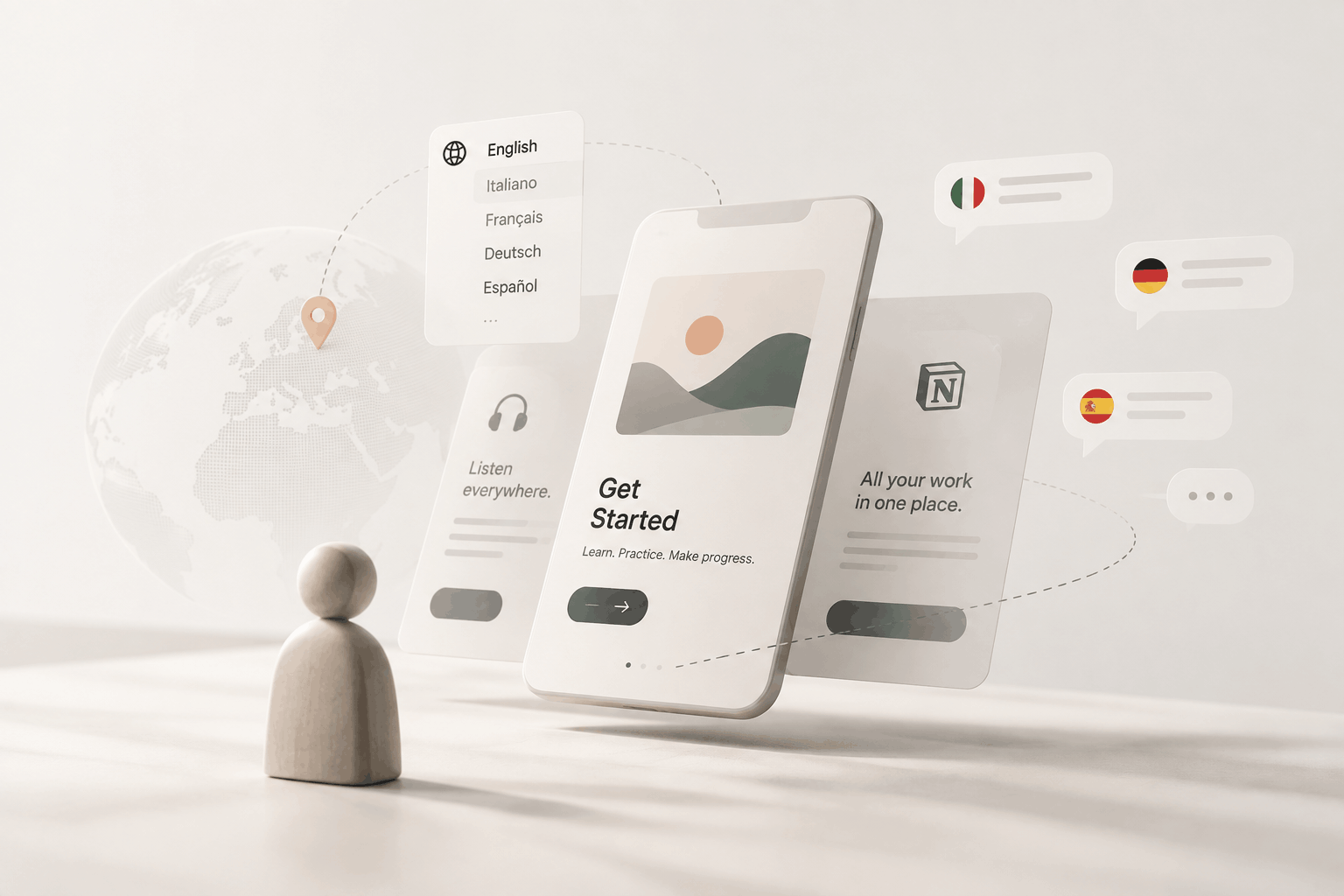
I’ve always been interested in what happens when products speak a different language than their users. This study explores how English-default interfaces shape trust, understanding, effort, and inclusivity for people navigating digital products in a second language.

UX Research | Mixed Methods | Survey Design | Quantitative Analysis | Multimodal Analysis

— The Problem

Many global apps adapt prices, currencies, and selected interface elements to local markets while leaving key onboarding and upgrade experiences in English. This creates a gap between a product’s global design strategy and how users actually understand, trust, and engage with the interface.

— The Scope

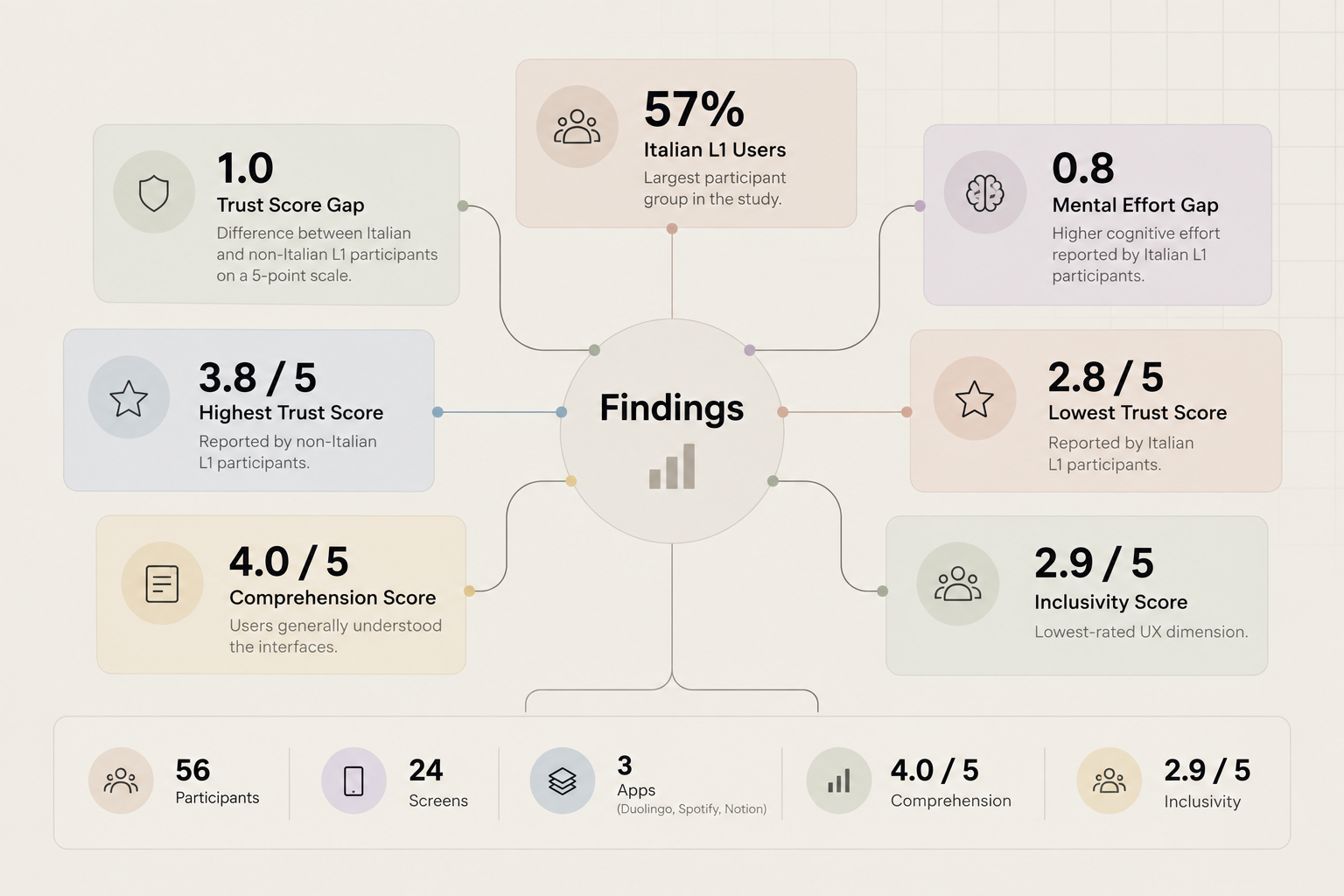
This study examined 24 onboarding and upgrade screens from Duolingo, Spotify, and Notion, combining multimodal interface analysis with survey data from 56 participants to explore the effects of language on comprehension, mental effort, trust, motivation, and inclusivity.

— Tools & Process

Throughout the project, I used a range of tools to support different stages of the research process. Notion helped me organize the project timeline and writing schedule, while NotebookLM supported literature review and source synthesis. Early ideas, themes, and research questions were explored through Miro using mind maps and card-based organization. Google Forms was used to collect survey responses, Google Sheets to manage the dataset, and SPSS to analyze quantitative results. Finally, Figma was used to annotate interfaces and visualize findings, while Canva helped transform the research into clear and accessible presentations.

— Methodology

I combined multimodal interface analysis with user perception research to understand not only how English-default interfaces are designed, but how they are actually experienced by users. By examining real app screens alongside survey responses from 56 participants, I explored the relationship between language, comprehension, trust, mental effort, motivation, and inclusivity.

— Findings

— Takeaways

What Could Have Been Improved in the Product?

The findings suggest that comprehension alone is not enough to create a positive user experience. Key onboarding and subscription flows could have been more inclusive through clearer language options, localized microcopy, and communication strategies that reduce uncertainty at moments requiring trust or commitment.

What Would I Improve in the Research?

If I were to conduct this study again, I would recruit a larger and more balanced participant sample across language groups. I would also incorporate moderated usability sessions to observe user behavior in real time, complementing the perception data collected through surveys.

What If There Were No Research Constraints?

With unlimited time and resources, I would expand the study across additional countries, languages, and app categories while combining surveys, interviews, eye-tracking, and behavioral analytics. This would allow a deeper understanding of how language influences not only perception, but also real-world user decisions and interactions.


Full preprint available via DOI: 10.31235/OSF.IO/ZAX8G_V1